
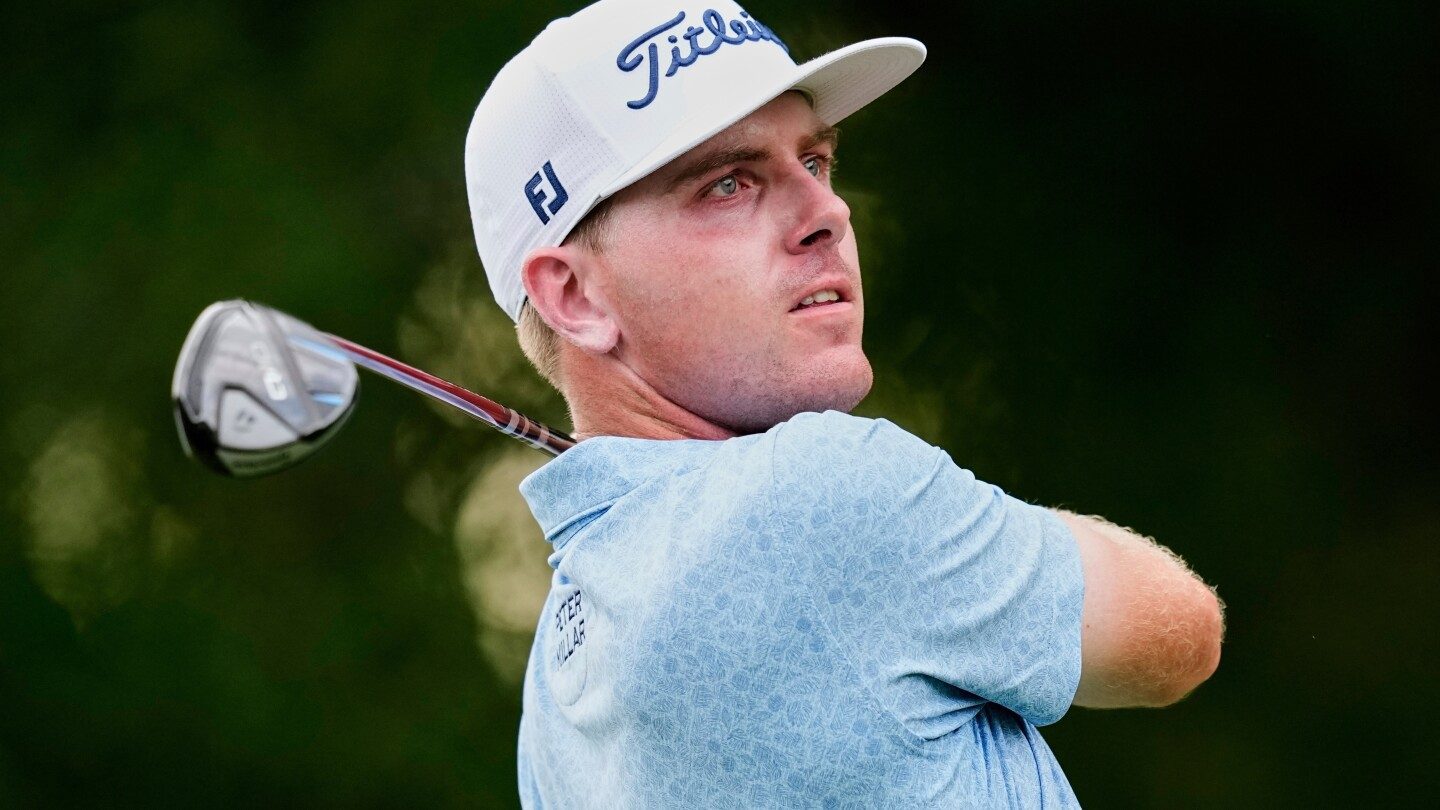
Ryan Gerard left his home in South Florida at 5:30 p.m. on December 13, embarking on a journey he never imagined taking this year, but one he didn't regret at all. He returned home nine days and approximately 20,000 miles later, with stops that included Italy and a small island off the African coast, plus an eight-hour layover in Paris that allowed him to visit the Arc de Triomphe and Notre-Dame Cathedral.
“I’m looking at the Eiffel Tower,” Gerard said over the phone Monday afternoon. “It’s breathtaking.” And, as if that weren’t enough, he received an invitation to the Masters during his trip. That green card—Augusta National doesn’t send electronic invitations—might not arrive immediately. The official world golf rankings will be released on Sunday, and the 26-year-old will be ranked 44th.
All of this is due to his decision to participate in one last tournament, which involved flying over the Atlantic Ocean, the Mediterranean Sea, the Red Sea and the Indian Ocean to reach the Mauritius Open, the last tournament of the year on the European Tour and Sunshine Tour calendar.
Despite the 36-hour journey—he arrived at his hotel at 1 p.m. local time on Monday—Gerard started with rounds of 68 and 69, tying for fifth place. At that point, he was ranked 57th in the world and needed a tie for fourth to break into the top 50.
An unexpected opportunity
“I decided to give myself one last chance and do my best,” he said after the second round. “That way I could be satisfied with my performance this season and with my goal of finishing in the top 50 at the end of the year to qualify for the Masters. So it was a big boost to come all the way from Florida and compete. It wasn’t in my plans at the start of the season, that’s for sure.” And then, bingo! The next day, he shot an impressive 63 at Heritage La Reserve Golf Links, which put him in the lead.
On Sunday, he found himself in a playoff with the hot-headed Jayden Schaper, the South African who had won the previous two tournaments with playoff eagles. In Mauritius, Schaper holed out from about 60 yards before the green to beat Gerard. “I would have loved to win,” Gerard said. “But it was an incredible shot. He nailed it. Two bounces, controlled the side slope, and it went in. Hats off to him. He’s been playing some great golf. Two weeks in a row he’s eagled from off the green to win.”.
A new beginning
The consolation for Gerard was significant: his first-ever Masters invitation. Augusta was on his mind when he participated in the RSM Classic at Sea Island last month, the final PGA Tour event of the year, where he was ranked 49th in the world. However, he missed the cut. “I was checking on Friday afternoon and thought, ‘Does it make sense to do anything?’ I was going to try to play the Nedbank in South Africa, but the tournament deadline was the day before I missed the cut,” Gerard explained.
The Alfred Dunhill wasn't an option because it clashed with the wedding of his good friend and former North Carolina teammate, Ben Griffin. So, Mauritius was the last place on his list. He'd heard so much about Christo Lamprecht's course that he checked the schedule, did the math, and signed up. Gerard had already traveled quite a bit after narrowly missing the Tour Championship, playing in Ireland, England, Japan, and Abu Dhabi. Clearly, he's up for the trip. This summer, he crossed eight time zones from Scotland to Lake Tahoe and then won the Barracuda Championship, his first PGA Tour title.
What does one more trip mean with so much at stake?
The key to this story was his victory at the Barracuda Championship, the same week as the British Open. As an opposite-course event, it didn't grant a Masters invitation, but being co-sanctioned by the European Tour, it gave him access to those events. “I guess I understood that,” he said of his European advantage. “I just didn't realize how impactful it could be.”.
Pursuing points in golf can be risky. For example, Griffin played 13 consecutive weeks earlier this year in a bid to qualify for the Masters, but fell short. There's also the case of Brandt Snedeker, who in 2017 was sidelined for five months with a sternum injury and saw his world ranking plummet. He finished the PGA Tour season ranked 50th and then began to slide. Snedeker, like Gerard this year, flew halfway around the world to participate in the Indonesia Masters, but it didn't end well for him; he was close to making the cut when he had to withdraw after the second round due to exhaustion and dehydration.
Gerard wasn't on his last chance. He would have had three months to start 2026 and win or perform well enough to break into the top 50, but he saw an opportunity. “I figured I didn't have anything better to do,” he said. “It seemed like an interesting thing, I made sure it worked logistically, and I just went for it.”.
___
On The Fringe analyzes the most important golf topics during the season. AP golf: https://apnews.com/hub/golf