
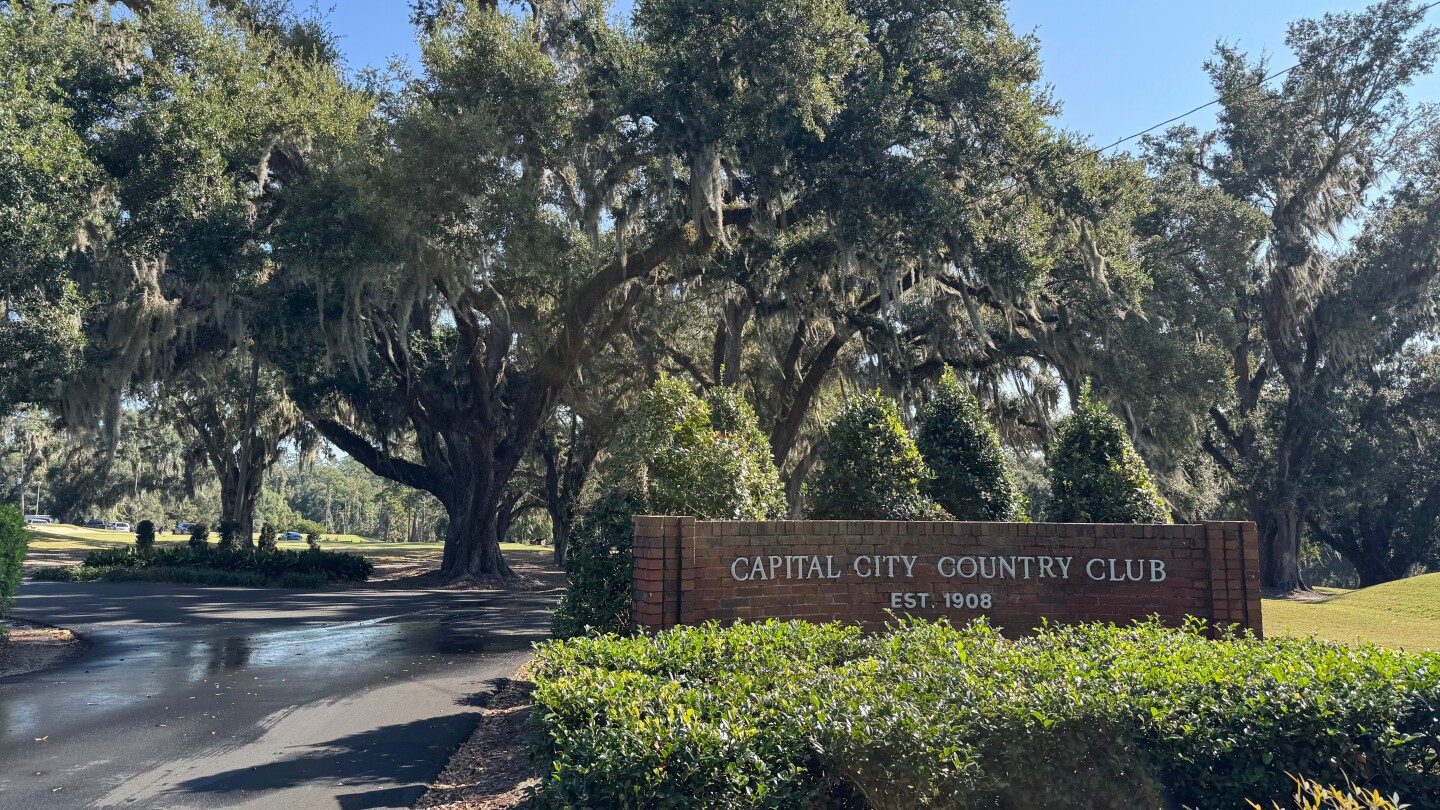
On October 22, 2025, a sign for the Capital City Country Club was seen in Tallahassee, Florida. (AP Photo/Kate Payne, File) Local officials in Florida's capital have decided to sell a city-owned golf course, built on the graves of enslaved people, to a club that was segregated in the past, despite strong opposition from residents and historians.
At the Capital City Country Club, located in one of Tallahassee's most desirable neighborhoods, lie the former graves of enslaved people who lived and died on the plantation that once covered the area. On Wednesday, the Tallahassee City Commission approved the sale of this 178-acre (72-hectare) golf course for $1.255 billion, by a vote of 3 to 2.
The graves beneath the golf course
In 2019, archaeologists from the National Park Service identified what they believe to be 23 unmarked graves and 14 possible graves near the 7th hole of the golf course, which is semi-private and currently operates on city land. Across the country, thousands of unmarked and forgotten cemeteries of enslaved people are at risk of being lost, while descendants and volunteers fight against development and indifference.
This agreement has reopened painful wounds from Tallahassee's segregated past and reignited concerns among local activists, who question the city's long delay in building a memorial site to preserve and protect unmarked graves, more than four years after the commission voted in favor of it.
Justin Jordan, a student at Florida A&M University, a historically Black university, said: “Like many other African Americans in America, I am a descendant of slaves. I don’t have the ability to visit my ancestors” graves. I don’t have the luxury of knowing most of their names. I don’t know their history. And that’s why I strongly oppose the sale.”.
The terms of the agreement
When the real estate deal was discussed at a commission meeting in October, no work had been done on the memorial. Since then, the city has installed a historical marker and cleared paths near the graves, while golfers continue to play on the hills of the course.
Under the terms of the agreement, the oak-lined property must remain an 18-hole golf course and cannot be developed. Approximately 14,980,000 of the sale proceeds will be used to construct the memorial site, ensuring public access, provided residents do not interfere with any active golf play. In addition, the club has committed to hosting the FAMU golf team for practice and competition, and the school's board of trustees has endorsed the agreement.
Despite this, some residents remain skeptical about the sale of the land to a club that was formerly exclusively for whites, also questioning the price of the expansive property given its potential for future development. The club, which according to a 2023 tax filing lists Florida Attorney General James Uthmeier as vice president, has been a regular haunt for influential figures in the city.
“Are we heading toward a golf course that will be a Mar-a-Lago 2 in Leon County? I’m not kidding,” commented Commissioner Jeremy Matlow, who voted against the sale. Although he didn’t mention Uthmeier by name, he referenced club “heavy hitters” and “attorneys general” with “connections to President Trump” in his concerns about privatizing the land.
A history of segregation
Over the decades, the land has changed between public and private ownership, with the club paying the city a token rent of $1 per year for nearly 70 years. This lease has been in place since 1956, when the club reverted to private ownership, allowing it to circumvent a U.S. Supreme Court ruling that prohibited the segregation of public parks and recreational facilities.
Among the former club members was a judge whose nomination to the nation's highest court failed after he faced questions about whether he helped privatize the club to prevent integration. Despite the controversy, the agreement received support from a majority of commissioners, including the board's two Black members. Commissioner Dianne Williams-Cox spoke about the need to move beyond the city's past and reinvest the revenue in public services. "When we talk about considering the racist and segregationist history of this club, that's fine," she said.
“Put them in line with all the other things we’ve had to overcome in order to move forward.”