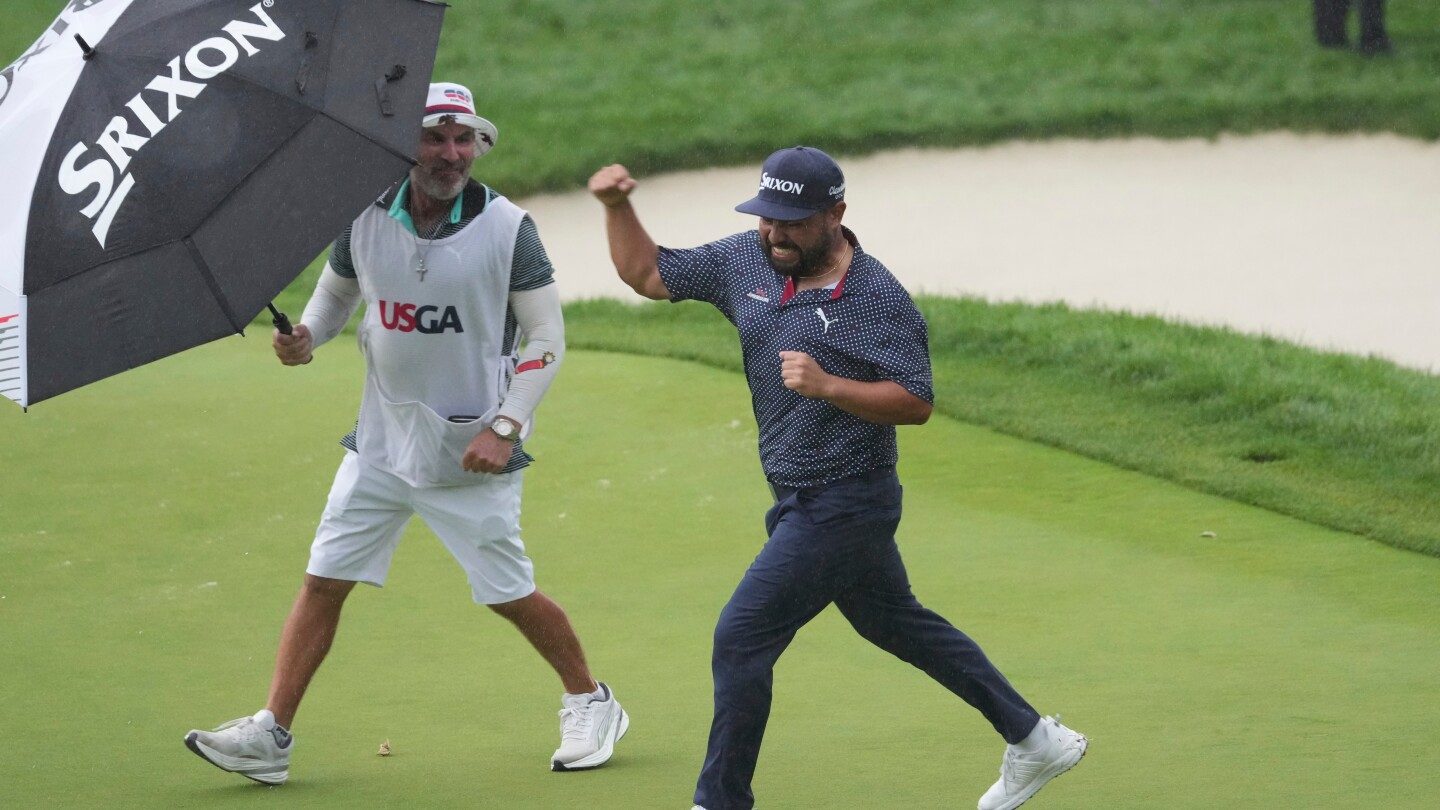
Great moments require memorable shots, and 2025 was full of them. Scottie Scheffler shone, Rory McIlroy finally won the major he so desperately wanted, and new champions emerged when least expected. What follows is an analysis of golf in 2025 based on memorable shots—not necessarily the best—made with every club in the bag. Each one tells a story.
Driver
In the final round of the U.S. Open, JJ Spaun was tied for the lead as he approached the 314-yard 17th hole at Oakmont. He used his driver for a low fade that landed on the front of the green and rolled back, leaving an approximately 18-foot putt. This allowed him to make a birdie and take a one-stroke lead heading into the final hole. And the best was yet to come.
Wood-3
Scottie Scheffler used his 3-wood on the 304-yard 14th hole at Quail Hollow, thinking he might come up short due to the headwind. However, the shot was nearly perfect, leaving him 3 feet short of eagle in the third round, which put him atop the leaderboard at the PGA Championship, where he won his third major.
Iron-3
Jackson Koivun, an Auburn junior, went from leading the Americans to victory at the Walker Cup at Cypress Point to competing against nearly every member of the Ryder Cup team at the Procore Championship. In the second round at Silverado, he showcased his skill with a 3-iron that left the ball 30 inches from the par-5 12 for eagle. Koivun ended up playing in the final group and tied for fourth place before returning to college.
Iron-4
Rory McIlroy, four strokes off the lead in the final round of The Players Championship, used a 225-yard 4-iron to make a birdie-eagle on the par-5 second hole, which brought him back into contention. He eventually won in a playoff against JJ Spaun on Monday. McIlroy described that 4-iron as his best shot of the week: “It was pretty much perfect,” he said.
Iron-5
Russell Henley, who prefers a draw, faced a difficult par-3 14th at Bay Hill, where he needed a cut, especially as he was three strokes behind Collin Morikawa at the Arnold Palmer Invitational. With a 5-iron, he made a 10-foot cut for birdie, starting an unexpected comeback that led to one of his best seasons, reaching fourth in the world rankings and securing a place on his first Ryder Cup team.
Iron-6
Justin Rose, winless in over two years, was three strokes back when he used a 6-iron over the water, leaving the ball 15 feet deep on the par-3 14th, the toughest hole on the back nine at TPC Southwind. This was the start of four consecutive birdies, which allowed him to win in a playoff at the FedEx St. Jude Championship. At 45, he returned to the top 10 in the world rankings and qualified for the Ryder Cup.
Iron-7
Viktor Hovland, who had missed three consecutive cuts, was unsure whether to enter the Valspar Championship. However, on Innisbrook's most challenging hole, two strokes down, Hovland hit a 7-iron over the water and into a bunker, leaving the ball six feet from a birdie spot, sparking a comeback that led to his victory. He's not to be underestimated. It's worth noting that the best 7-iron of the year was McIlroy's on the par-5 15th at the Masters, where he curled it around a pine tree to six feet, though he missed the eagle putt.
Iron-8
Scheffler rallied from a four-stroke deficit in five holes during the final round of the BMW Championship, keeping the battle close until the back nine. In a fairway bunker, with Robert MacIntyre well positioned, Scheffler hit a 6-foot 8-iron for birdie, taking a two-stroke lead that propelled him to his fifth victory in his last 10 tournaments.
Iron-9
Ryder Cup captain Keegan Bradley heard chants of “USA” on the 18th fairway at the Travelers Championship, then hammered a 6-foot 9-iron for birdie, securing a victory in New England when Tommy Fleetwood bogeyed. This was Bradley’s second win in 10 months, sparking intense debate about whether he should elect himself as player-captain. He ultimately decided against selecting himself for Bethpage Black.
Pitching wedge
While Koivun led the college players, high school student Mason Howell also stood out. He won the U.S. Amateur Championship and closed out a foursomes match on the 17th hole at Cypress Point, sinking a pitching wedge from 147 yards in a 2 and 1 victory. Howell went 2-0-1 in another U.S. win at the Walker Cup.
Gap wedge
McIlroy lost the lead twice on the back nine at Augusta National and found himself in a playoff against Rose, with the Masters green jacket and his career Grand Slam on the line. He used a gap wedge to leave the ball 3 feet from the 18th hole of the first extra hole, and after Rose missed a 15-foot putt, McIlroy sank the short birdie putt to finally win the Masters.
Sand wedge
Golf scores have been declining, and Hideki Matsuyama took this to a new level at The Sentry. He holed out with a sand wedge for eagle on the par-4 3rd hole at Kapalua, beginning his march to a historic victory. The Japanese golfer set a PGA Tour record by finishing at 35 under par, winning by three strokes.
Lob wedge
The most exciting finish to a major this year had to end on the first playoff hole. Grace Kim took her approach shot to the par-5 18th at the Evian Championship into a creek. Kim used a lob wedge and chipped over the creek, sinking for birdie and extending overtime. Kim, who had eagled in regulation to force a playoff with Jeeno Thitikul, eagled again on the second playoff hole to capture her first major. Thitikul, the LPGA's top-ranked player, finished the year without a major.
Putter
Spaun arrived at the 18th hole at Oakmont with a one-stroke lead, a rare occurrence in a U.S. Open. He hit the sodden fairway and then the green, but was 65 feet out and needed two putts to avoid a playoff with MacIntyre. Spaun sank the longest final putt ever by a U.S. Open champion, a shot that is now part of the tournament's history. MacIntyre couldn't help but applaud.